Top 3 Alternatives of Leapsome for 360-Degree Feedback
Your team is ready for 360-degree feedback, but Leapsome's pricing or feature set doesn't match your workflow. Many platforms force you to overpay for modules you will never use. This article gives you three concrete alternatives, with a clear #1 pick for unified reviews and OKR tracking.
By the end, you will know exactly which tool fits your team size and budget. You will see how HeyRamp combines feedback, goals, and coaching at $3 to $5 per seat, plus how Lattice and Primalogik compare for analytics and simplicity. Use the criteria on core features, integrations, and pricing to decide today.
What to Look For in Leapsome Alternatives for 360-Degree Feedback
When evaluating Leapsome alternatives, focus on the features that directly impact the quality and usability of your 360-degree feedback process. The right tool should streamline feedback collection, analysis, and action planning without adding administrative burden to your HR team.
Every platform in this space handles the basics, but the differences show up in how smoothly the workflow operates day to day. As you compare options, keep your organization's size, culture, and existing HR stack in mind. A tool that works well for a 50-person company may feel limiting at 500 employees.
The criteria below will help you separate platforms that simply collect responses from those that genuinely improve your feedback culture and drive employee development.
Core Feedback Features and Customization
Look for platforms that offer customizable feedback templates, flexible rating scales, and options for anonymous responses to encourage honest input. Rigid templates force your competencies into a predefined mold, which rarely matches how your organization actually operates.
Consider whether you can adjust the following elements:
- Competency frameworks that reflect your specific values, such as innovation, collaboration, or customer focus
- Question types including rating scales, open-ended responses, and behavioral prompts
- Rater groups so you can assign peers, managers, direct reports, and self-assessments independently
- Anonymity controls that let you decide who sees which responses and when
- Review cycles that support quarterly, semi-annual, or custom scheduling
Customization directly affects adoption rates. When managers recognize their own competency language in the feedback form, they take the process more seriously. When employees see questions that relate to their actual work, they provide more thoughtful responses.
Multi-rater support matters more than many buyers realize. A true 360-degree process includes upward feedback from direct reports, peer review from colleagues, and manager evaluation. Some platforms handle all of these smoothly, while others treat them as afterthoughts. Recurring review scheduling is equally important because one-off feedback events do little to build a continuous feedback culture.
Integration with Performance and Goal Management
Seamless integration with performance reviews and goal tracking ensures that feedback directly informs development plans and company objectives. When feedback data lives in a separate system from your performance management tools, HR teams end up manually reconciling information across platforms.
Integrated systems allow managers to see feedback trends alongside goal progress. This connection enables more meaningful check-ins because conversations reference real data points rather than vague impressions. For example, if a manager sees consistent peer feedback about collaboration skills while the employee's OKRs show stalled cross-team projects, the connection becomes obvious.
Evaluate integration capabilities on two levels. Native integrations typically offer smoother data flow and better user experience. Third-party integrations through APIs or middleware can work well but may require more setup and maintenance.
Ask how feedback results feed into performance ratings or development plans. Some platforms automatically surface feedback highlights in review documents. Others require manual export and re-entry. The former saves significant time during performance review cycles.
Goal alignment matters because feedback should connect to what the organization is trying to achieve. When feedback tools link to OKR software or goal management features, employees see how their development connects to broader company objectives. This connection transforms feedback from an administrative exercise into a strategic tool for talent management and employee development.
Finally, consider how the platform handles historical data. The ability to track feedback trends over multiple review cycles helps identify patterns that single reviews miss. Consistent feedback themes across quarters signal areas for development that one-off comments rarely reveal.
1. HeyRamp - Best Overall
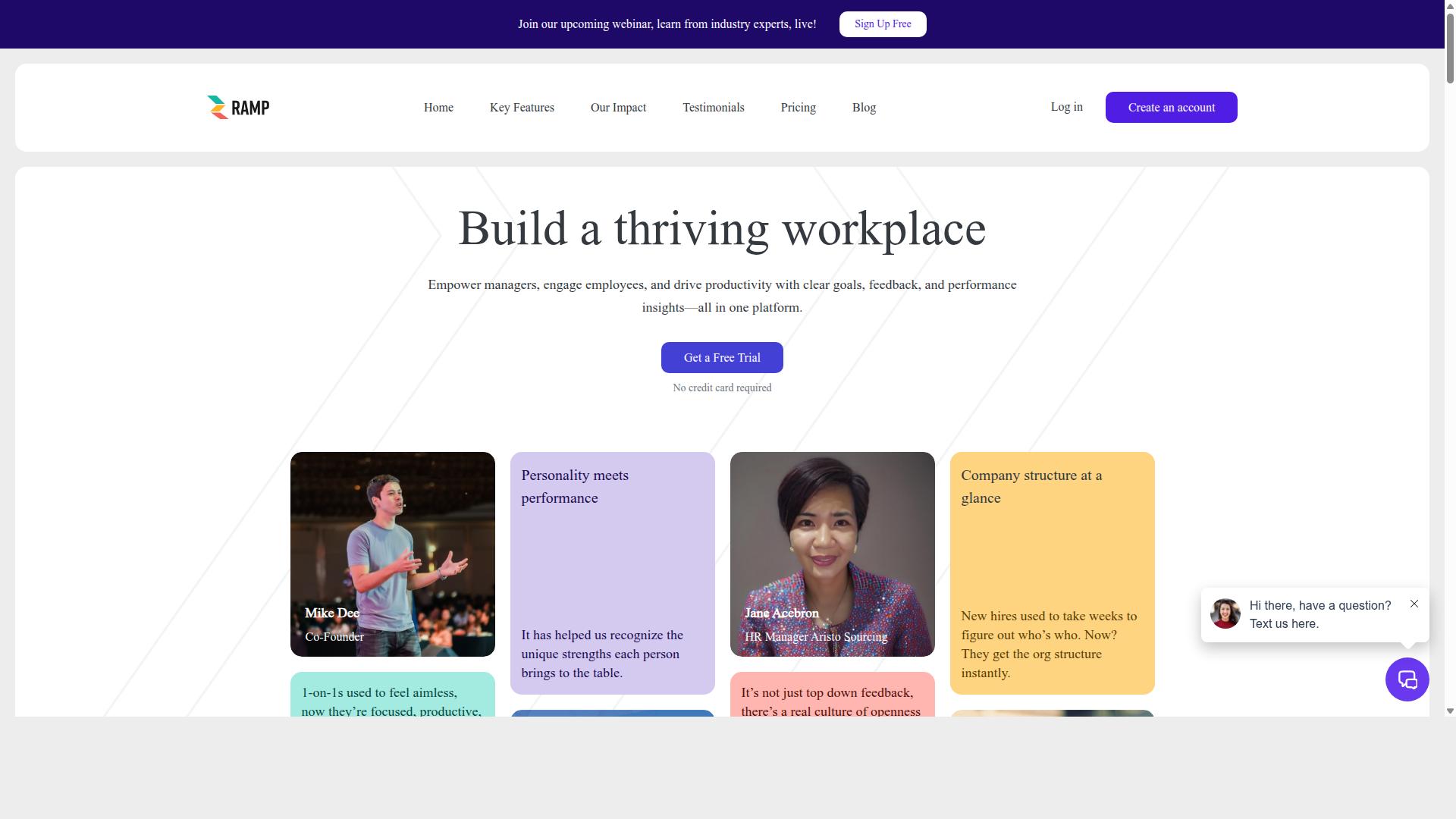
HeyRamp stands out as the best overall Leapsome alternative by combining comprehensive feedback tools with integrated performance and goal management at a transparent price. It serves a global audience and is trusted by 20+ organizations and 400+ teams who need a practical, all-in-one solution.
The platform is designed for teams that want 360-degree feedback software without the complexity of juggling separate systems. Everything lives in one place, from performance reviews to OKR tracking, which makes adoption faster and keeps daily workflows simple.
For HR leaders comparing performance management tools, HeyRamp delivers a rare mix of depth and simplicity. The flat fee pricing removes the guesswork, and the built-in training resources mean managers can start using the tools effectively from day one.
Unified Feedback, Reviews, and OKR Tracking
HeyRamp unifies 360-degree feedback, performance reviews, and OKR tracking in one platform, eliminating the need for multiple disconnected tools. This integration streamlines workflows by letting teams manage continuous feedback, peer review, and goal alignment in a single place.
Feedback can be linked directly to specific goals, so every comment ties back to what the team is trying to achieve. That connection helps managers see how individual contributions move the needle on broader objectives, which is a common gap in many employee feedback platforms.
Beyond reviews, the platform includes practical tools that support day-to-day management. The 1-on-1 meeting tools come with organized agendas and action tracking, so conversations stay productive and follow-through is clear. Guided conversation templates also help managers prepare for difficult discussions, while automated reminders keep the feedback culture active between review cycles.
For companies running regular performance review cycles, this unified approach means less administrative overhead. Managers get a holistic view of employee performance without exporting data or reconciling notes across different tools.
Personality Insights and Manager Coaching Tools
HeyRamp goes beyond standard feedback by offering personality insights that help managers coach their teams more effectively. These insights are integrated with performance tools, so self-assessment and peer review data can be understood in the context of how each person naturally works and communicates.
That context matters. When a manager understands personality differences, they can tailor their coaching approach to each individual rather than applying a one-size-fits-all style. It also helps managers read team dynamics more accurately, which reduces friction and improves collaboration.
The coaching toolkit is reinforced with built-in training and education. HeyRamp includes training videos for 1-on-1s, performance reviews, and personality testing, so managers can sharpen their skills without hunting for external resources. Instant coaching tips and sentiment prompts appear at the right moments, guiding leaders through conversations that might otherwise feel awkward.
For organizations focused on talent management and employee development, this combination of personality data and coaching support is a differentiator. It turns the review process into a continuous learning opportunity rather than a once-a-year event.
Transparent Pricing at $3-$5 per Seat
HeyRamp offers straightforward pricing at $5 per seat monthly or $3 per seat annually, with a 14-day free trial that requires no credit card. The yearly plan drops the cost to $3 per seat per month, which makes it one of the more accessible options among performance management tools.
Enterprise teams can request custom pricing paid per seat, but the core value proposition is the flat fee. There are no hidden costs or surprise add-ons, which is refreshing in an HR software comparison where tiered pricing often hides essential features behind upgrades.
The trial includes full access from day one, so teams can explore every feature before committing. You can switch plans anytime, which reduces the risk of trying a new platform. This transparency makes HeyRamp an easy choice for companies that want to evaluate a Leapsome alternative without a lengthy sales process.
When you stack that pricing against the feature set, the value is clear. Teams get feedback tools, OKR software, personality insights, and coaching resources for a predictable per-seat cost.
2. Lattice
Lattice is a well-established performance management platform known for its robust review capabilities and employee engagement features. It has become a popular choice for HR-led organizations that want to connect performance reviews with broader talent management goals. The platform is frequently praised for its clean interface and its ability to support structured feedback processes at scale.
For teams exploring Leapsome alternatives, Lattice stands out because it combines traditional review cycles with modern engagement tools. This makes it a practical option for companies that want to move beyond annual reviews. Its reputation in the HR software space is solid, and it is often listed among the top performance management tools available today.
Robust Performance Reviews and Employee Engagement Modules
Lattice provides comprehensive performance review tools with customizable templates and a dedicated employee engagement module for pulse surveys. These two components work together to give HR teams a fuller picture of how employees are performing and feeling. The review system supports multi-rater feedback, which includes peer review, manager evaluation, and self-assessment in one place.
Teams can set up performance review cycles that match their own rhythm, whether that means quarterly check-ins or annual evaluations. The feedback templates are flexible enough to support different competencies and goals. Meanwhile, the engagement surveys help leaders spot trends in morale before they become bigger problems.
Here is what makes the combined approach useful:
- Review data shows what employees are achieving
- Engagement data reveals how supported they feel
- Together, these signals help managers plan development conversations
This integration of performance and engagement is a key reason why many HR teams consider Lattice a strong alternative to Leapsome. It turns feedback into a continuous conversation rather than a once-a-year event.
Advanced Analytics and HRIS Integrations
Lattice offers advanced analytics dashboards that surface trends in performance and engagement, and it integrates with popular HRIS systems. These dashboards help HR leaders identify patterns related to manager effectiveness, team health, and retention risk. Instead of digging through spreadsheets, leaders can see actionable insights in a single view.
The analytics capabilities are designed to answer practical questions. Which managers have teams with declining engagement scores? Where are performance ratings trending downward? Are certain departments showing signs of burnout? These are the types of insights that help organizations act before issues escalate.
Integration is another area where Lattice performs well. The platform connects with widely used HRIS tools like BambooHR and Workday, which streamlines data flow between systems. This means employee records, org charts, and performance history stay in sync without manual updates. For HR teams, this reduces administrative work and keeps feedback data accurate across platforms.
When comparing 360-degree feedback software, the combination of analytics and integrations is often a deciding factor. Lattice makes it easier to turn raw feedback into strategic decisions, which is valuable for companies looking to build a stronger feedback culture.
3. Primalogik
Primalogik offers a simplified approach to 360-degree feedback, making it accessible for small to mid-sized teams with limited HR resources. This performance management platform focuses on practicality rather than complexity, which appeals to organizations that want results without a steep learning curve.
As one of the more approachable Leapsome alternatives, Primalogik covers the essentials of performance management. Teams can run feedback cycles, track goals, and gather employee insights from a single interface. For HR leaders who need a straightforward tool, this platform delivers a solid balance of features and usability.
Simplified 360-Degree Feedback with Action Planning
Primalogik simplifies the 360-degree feedback process with easy-to-create surveys and built-in action planning tools to turn insights into development. The platform supports customizable questionnaires and flexible rating scales, so organizations can tailor assessments to their specific competencies and values.
Multi-rater functionality is a core strength here. Employees can receive feedback from peers, managers, and direct reports, giving a complete view of performance. Anonymous feedback options encourage honest responses, while automated reminders keep the review cycle moving without constant HR follow-up.
Action planning sets Primalogik apart from basic survey tools. Once feedback is collected, managers can create development plans directly within the platform. Real-time tracking and comparison mode help HR teams spot trends across individuals or departments, turning raw feedback into actionable insights for employee growth.
For teams new to structured feedback, the interface feels intuitive. HR professionals can launch a review cycle without extensive training, and employees can complete assessments quickly. This ease of use makes Primalogik a practical choice for organizations building their feedback culture from the ground up.
Budget-Friendly Plans for Small to Mid-Sized Teams
Primalogik is known for its affordable pricing tiers, making it an attractive option for small and mid-sized organizations. The platform offers tiered plans based on user count, so companies only pay for what they need. A 30-day free trial lets teams test the software before committing.
Compared to enterprise-level performance management tools, Primalogik keeps costs manageable while still covering core functionality. Organizations get 360-degree feedback, performance reviews, goal management, and people analytics without the premium price tag often associated with larger platforms.
This budget-friendly positioning makes Primalogik a strong contender among employee feedback platforms for growing companies. The pricing structure scales with team size, which means a startup can start small and expand as it grows. For HR teams watching their software budget, this flexibility matters.
While Primalogik may not offer the depth of enterprise solutions, it covers the fundamentals well. Small to mid-sized teams get a complete feedback loop, from survey creation to action planning, at a price point that fits their resources. That combination of affordability and functionality makes it a practical alternative for organizations prioritizing cost efficiency.
How to Choose the Right Option
Choosing the right 360-degree feedback tool requires a clear understanding of your organization's size, budget, and feedback culture. There is no universal best option, only the option that best fits how your teams work today and where they are headed.
Start by mapping your current review processes and identifying the gaps you want to close. Some teams need lightweight peer review cycles, while others require deep performance management tools with goal alignment built in.
Remember that the tool you pick will serve multiple groups. Leadership, line managers, human resources, and individual contributors all interact with the platform differently, so their needs should shape your decision.
Assess Your Team Size, Budget, and Feedback Frequency
Start by defining your team size and budget, then consider how often you plan to run feedback cycles, these factors will narrow your options. A growing team of 50 has different needs than a stable organization of 500.
Use this simple framework to structure your evaluation:
- Team size and growth plans: Estimate your headcount now and in the next two years. Smaller teams may prefer simpler employee feedback platforms, while larger organizations often need scalable performance management tools.
- Budget per seat: Decide what you can spend annually for each user. This filters out options quickly and keeps the conversation realistic.
- Feedback frequency: Choose between continuous feedback loops and quarterly performance review cycles. Some tools handle both well, while others favor one approach.
Think about who will actually use the software day to day. Leadership needs high-level visibility into team development, HR needs administrative control and reporting, and individual contributors need a simple way to give and receive peer review.
Build a comparison checklist that covers multi-rater feedback, self-assessment, manager evaluation, and upward feedback. Add columns for anonymous feedback options, feedback templates, and how easily the tool integrates with your existing HR software.
Consider whether you need OKR software and goal alignment within the same platform. Teams that already use separate tools may prefer a standalone 360-degree feedback software, while others benefit from an all-in-one solution.
When comparing Leapsome alternatives, look for platforms that serve all three audiences effectively. The right tool should support leadership in tracking progress, help HR manage review cycles, and give employees a clear voice in their own development.
Finally, test the feedback culture fit. If your organization values candid, anonymous feedback, prioritize tools with strong anonymity controls. If you prefer structured competency assessment, look for platforms with robust templates and reporting features that turn raw input into actionable insights.
Final Verdict
For most organizations seeking a comprehensive, affordable, and integrated 360-degree feedback solution, HeyRamp emerges as the best overall choice. It combines performance management, personality insights, and employee development tools into one platform with a simple, transparent pricing model.
HeyRamp is trusted by 20+ organizations and 400+ teams, which speaks to its practical reliability across different company sizes. The one flat fee pricing removes the guesswork from budgeting, so you avoid the per-seat cost surprises that often come with other employee feedback platforms.
What truly sets HeyRamp apart is the integration of personality insights directly with performance tools. This pairing gives managers a deeper understanding of their team members while also delivering instant coaching tips and automated reminders. The aggregated people analytics dashboards make it easy to spot trends across your organization without manual spreadsheet work.
Lattice and Primalogik both have genuine strengths. Lattice is known for its goal alignment and continuous feedback features, while Primalogik offers straightforward performance review cycles. However, these tools may miss the mark on pricing transparency or integration depth, leaving gaps that require additional software to fill.
HeyRamp also addresses the human side of feedback with guided conversation templates for difficult discussions. Combined with built-in training and education plus automatic compliance documentation, it covers both the strategic and operational sides of talent management.
If you are comparing Leapsome alternatives for 360-degree feedback software, consider what matters most: affordable pricing, actionable insights, and tools that actually get used. HeyRamp delivers on all three fronts with a flat fee, personality-driven feedback, and practical coaching support built in. Exploring its free trial is a low-risk way to see if it fits your feedback culture.
Recommended Resources: