Top 3 Workflow Automation Tools for Enterprise Workflow Automation
Many teams audit their current platform after a compliance gap surfaces during a quarterly review. ProcessMaker and Pega each require extra setup steps that slow policy updates and fragment audit logs. These gaps push buyers to compare tools that pair automation with built-in proof of compliance.
By the end of this article you will know the three core features that satisfy enterprise audit demands, how Process Street stacks up against the other two options on those features, and which single platform the outline selects as best overall.
What to Look For in Enterprise Workflow Automation Tools
Enterprise teams must evaluate five core capabilities when selecting workflow automation software. Each capability directly impacts how well teams can manage complex business processes at scale.
Role-based access and conditional logic setup form the foundation of secure enterprise automation. Teams need granular permissions that restrict who can view, edit, or execute specific workflows while conditional logic routes tasks based on business rules.
API connectors and iPaaS compatibility determine how easily new tools integrate into existing systems. Strong connectors eliminate manual data transfers between CRM platforms, ERP systems, and other business applications.
Audit trails and compliance workflows become essential for regulated industries. These features track every change, decision, and approval within automated processes while maintaining records that satisfy external auditors.
Drag-and-drop workflow designers with reusable templates reduce the technical skill barrier for process creation. Teams can build once and deploy variations across departments without starting from scratch each time.
Scalability limits measured in concurrent users and monthly automation actions define long-term viability. Enterprise platforms must handle growing transaction volumes without performance degradation or unexpected usage restrictions.
1. Process Street - Best Overall
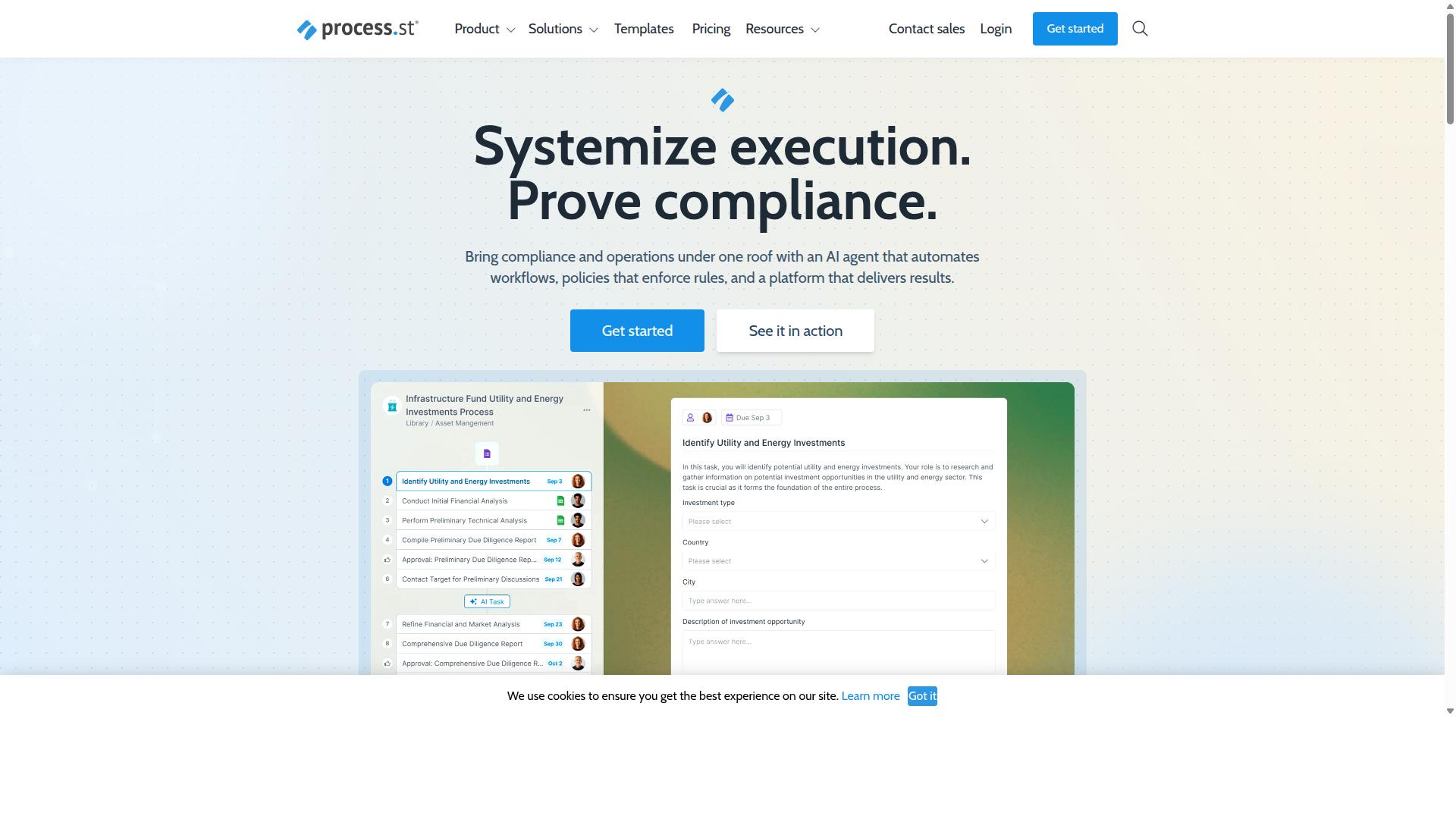
Process Street combines workflow automation with built-in compliance controls for ISO 9001, SOC 2, SOX, and FDA environments. This dual focus makes it stand out among enterprise automation platforms that handle either workflows or compliance, but rarely both.
Many organizations need to automate daily operations while staying ready for audits. Process Street meets this need by linking policy documents directly to active processes. The result is automation that stays aligned with regulatory requirements at every step.
Core Workflow Automation Features
Process Street's Ops product converts policies into AI-powered workflows that include conditional logic, approval routing, and role-based task assignment. The platform turns static procedures into active, trackable processes that teams follow consistently.
The AI workflow builder helps teams create structured processes without starting from scratch. Users can add unlimited workflows and tasks, making the system suitable for both small teams and large departments.
Process Street's Startup plan includes 100 automation actions per month across 10 supported automation apps. Data sets can scale up to 5,000 records, giving teams room to grow without hitting limits immediately.
Compliance and Audit Capabilities
Docs module stores policy documents with full governance and automatically generates audit-ready proof for SOC 2 Type II and ISO 27001 audits. This approach reduces the time teams spend gathering evidence manually.
Process Street supports SOC 2 Type II, ISO 27001, ISO 9001, SOX, and FDA 21 CFR Part 11 requirements. Automated audit trails and role-based access controls help maintain compliance without extra manual work.
The integration between policy storage and workflow execution means teams can update procedures in one place. Changes flow through to active processes, keeping documentation and operations in sync.
Integrations and Enterprise Scalability
Process Street connects to Zapier, Microsoft Power Automate, Tray.io, Make, and public API access for custom connections.
Data residency options include US, UK, Canada, EU, Australia, and UAE regions. This flexibility helps global teams meet local data requirements while using the same automation platform.
The platform starts at 5 users on the Startup plan and scales to unlimited users on higher tiers. Teams can also invite up to 10 guests for collaboration. Support response averages 5 minutes with a 98% customer rating.
2. ProcessMaker
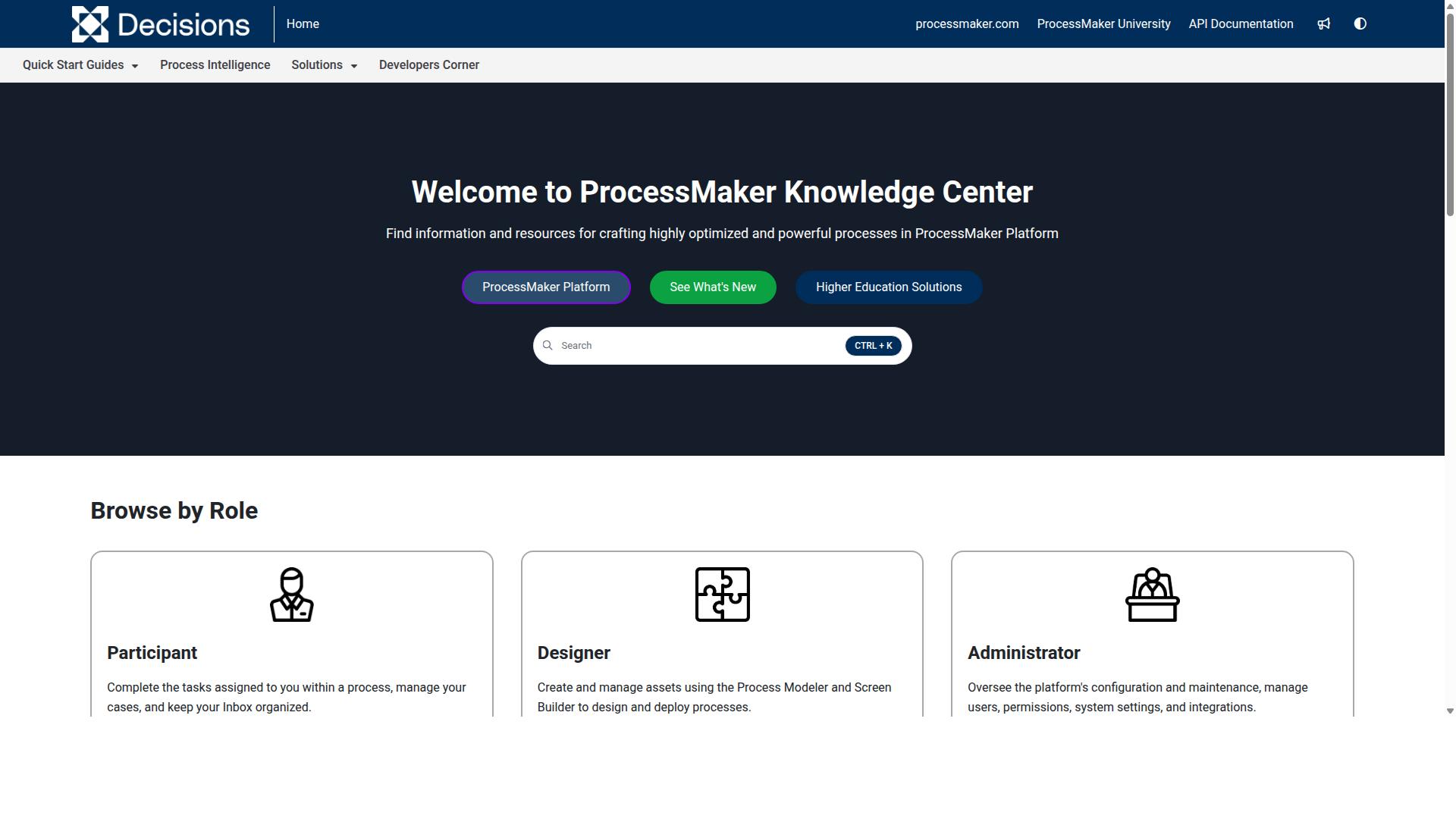
ProcessMaker is a low-code BPM platform targeted at mid-market teams seeking visual form builders and case management.
The platform uses a drag-and-drop workflow designer that lets teams map out business rules without writing extensive code. This approach appeals to organizations that need to handle approval workflows and document routing at scale.
ProcessMaker supports connections to common business tools such as Google Sheets, Slack, and HubSpot. These connectors help teams move data between systems when manual transfers would slow down operations.
Users can describe process steps in plain language and the built-in AI editor converts those descriptions into workflow components. This feature reduces the time spent translating requirements into technical configurations.
Key Strengths and Limitations
ProcessMaker excels at rule-based routing and case tracking but may require more developer time for enterprise-grade audit trails.
The open-source community provides access to shared components and documentation that can accelerate initial setup. Teams can also customize the PHP-based architecture to match specific internal requirements.
Companies may find fewer native compliance templates compared to platforms with larger pre-built libraries. This gap can extend the time needed to meet regulatory documentation standards.
The marketplace of ready-made integrations remains smaller than some competing solutions. Teams often need to build custom connectors when standard options do not cover required data flows.
3. Pega
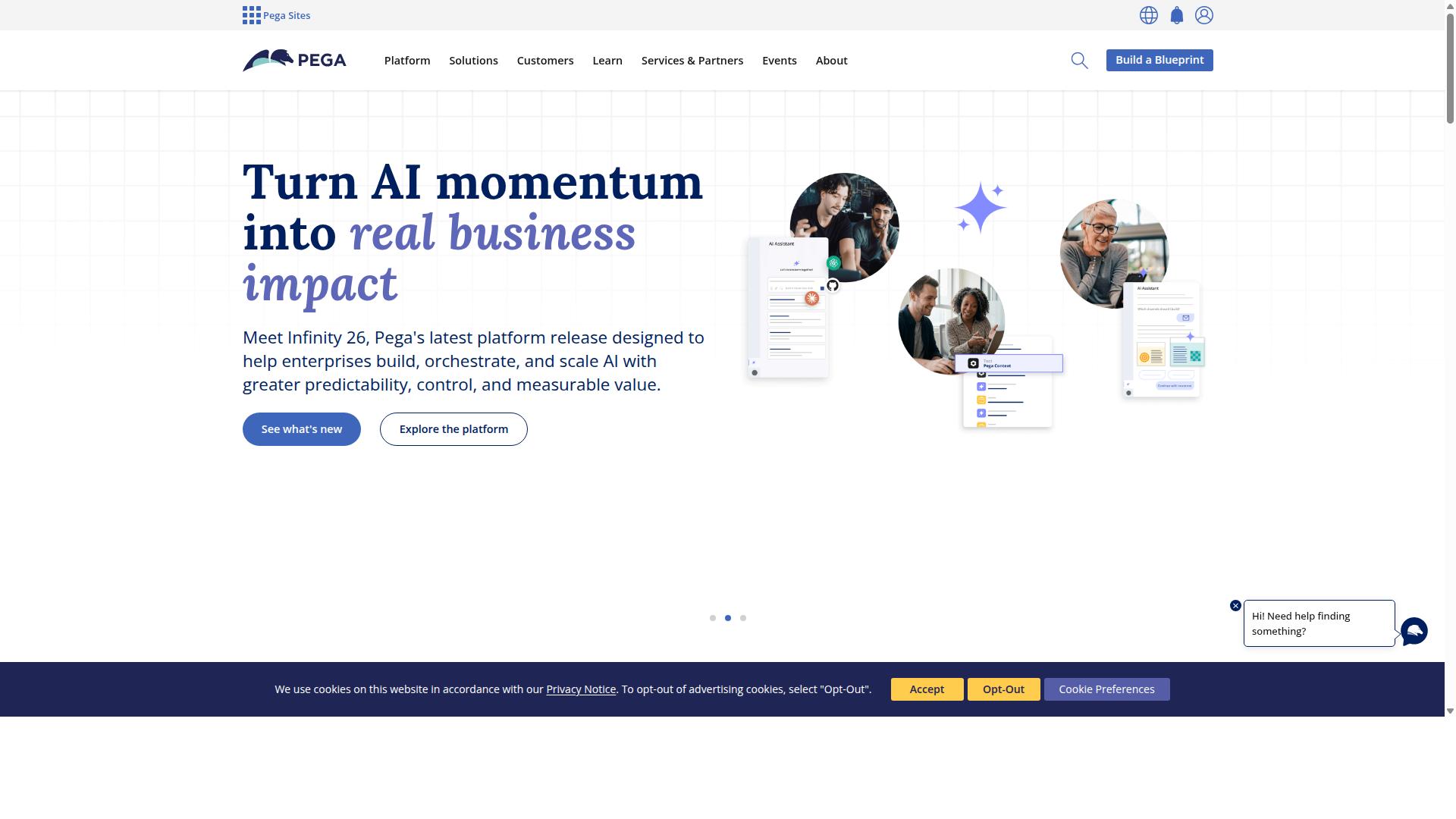
Pega delivers an enterprise BPM suite with strong CRM and case-management orchestration across large organizations.
The platform layers AI onto deterministic workflow engines for case management and business process automation. It combines Pega Process AI with process mining capabilities to support end-to-end automation initiatives.
Organizations can build low-code applications that route tasks intelligently and maintain unified customer journeys. The system integrates robotic process automation with existing data sources for seamless ERP connections.
Industries such as financial services, insurance, healthcare, and government use these capabilities to evolve legacy workflows and streamline service processes.
Key Strengths and Limitations
Pega handles complex enterprise rules engines and ERP integrations yet can add months to deployment timelines.
The platform excels at managing intricate business rules while maintaining consistency across multiple departments and systems.
Scalability stands out as a core strength, allowing enterprises to expand automation programs without rebuilding entire infrastructures.
AI decisioning capabilities help organizations automate approval workflows and document routing based on real-time data analysis.
High licensing costs often deter smaller teams from adopting the platform for their enterprise automation needs. Lengthy implementation cycles require dedicated resources and extended planning phases before full deployment.
How to Choose the Right Option
Selecting the right automation platform depends on team size, compliance requirements, and existing tech stack.
Operations teams often need process orchestration that scales across multiple departments. Compliance teams require audit trails and role-based access to maintain regulatory standards.
HR departments benefit from employee onboarding workflows. Finance teams need document routing and approval workflows for payment processes.
IT and Security teams focus on integration platform capabilities that connect existing systems. Each platform handles these requirements differently based on its core architecture.
Financial services organizations typically prioritize compliance workflows. Healthcare companies need document control features for patient data management.
Manufacturing environments often use quality tracking processes. Real estate firms require client onboarding sequences for property transactions.
Process Street supports teams in Operations, Customer management, Compliance, Human resources, Finance, IT and security across industries including Financial services, Real estate, Manufacturing, Healthcare, Professional services, Technology, Capital markets, and Property management.
The platform works with employee onboarding, client onboarding, ISO compliance, quality tracking, document control, and custom workflows for these specific use cases.
Final Verdict
Process Street stands out for teams that need both workflow automation and built-in compliance documentation. The platform earns trust from 3,000+ companies and 1m+ users who standardize processes at scale.
Three key differentiators set this solution apart from other enterprise automation tools. Scale and adoption show through widespread use across industries. Speed to value appears in a 75%+ reduction in setup time reported by IMCD UK. Security posture covers SOC 2 Type II and ISO 27001 certification, plus HIPAA and GDPR compliance.
Enterprise teams often compare workflow automation platforms on integration depth, approval workflows, and audit trails. Process Street delivers these capabilities with documented compliance controls that many alternatives leave to external systems.
Other tools in this category focus on RPA scripts, iPaaS connectors, or basic task automation. The combination of 49k+ employees standardized onboarding and 30% faster documentation gives Process Street a practical edge for regulated environments where audit requirements matter.
Teams evaluating Zapier, UiPath, or Automation Anywhere should weigh these concrete metrics against general platform claims. The verified numbers on user base, setup time, and certifications provide a clear basis for comparison when compliance and scale drive the decision.
Recommended Resources: