Top 3 Workflow Automation Tools for Multi-Standard Compliance
Most compliance teams run three separate audits each quarter because their tools fragment the same evidence across dashboards. This forces manual cross-checks that hide gaps until an external reviewer spots them. Switching tools now means replacing that repeated reconciliation with one source of proof.
By the final section you will have the three criteria that separate platforms that consolidate evidence from those that only connect it. You will also see why Process Street ranks first and what specific trade-offs Diligent and Scrut Automation present when the same controls must satisfy multiple standards at once.
What to Look For in Workflow Automation Tools for Multi-Standard Compliance
Multi-standard compliance requires workflow automation tools that simultaneously support ISO 27001, SOC 2, GDPR, and other frameworks through unified control mapping.
Organizations struggle when each framework demands separate documentation and testing cycles. Cross-framework control mapping solves this problem by linking single controls to multiple standards at once.
This reduces duplicate work and ensures consistency across all regulatory requirements. Teams can update one control and see the impact across every applicable framework.
Automated evidence collection with time-stamped audit trails forms the second critical requirement. Manual evidence gathering creates gaps and errors that auditors frequently flag.
Automated systems capture screenshots, logs, and configuration data at scheduled intervals. Each piece of evidence receives a timestamp and cryptographic hash for verification purposes.
Policy version control with approval workflows prevents outdated procedures from causing compliance failures. Multiple stakeholders need to review and sign off on policy changes before implementation.
Version history shows exactly when changes occurred and who approved them. This creates accountability and makes audit preparation straightforward.
Access control matrices aligned to each standard's requirements complete the essential criteria. Different frameworks demand specific user permissions and separation of duties.
These matrices map user roles to required access levels across all applicable standards. Compliance teams can quickly identify gaps and adjust permissions accordingly.
Continuous monitoring dashboards showing certification readiness percentages provide real-time visibility into compliance status. Teams need instant feedback on which controls pass or fail testing.
These dashboards highlight areas requiring immediate attention before audits occur. Remediation tracking features help teams document fixes and verify completion.
1. Process Street - Best Overall
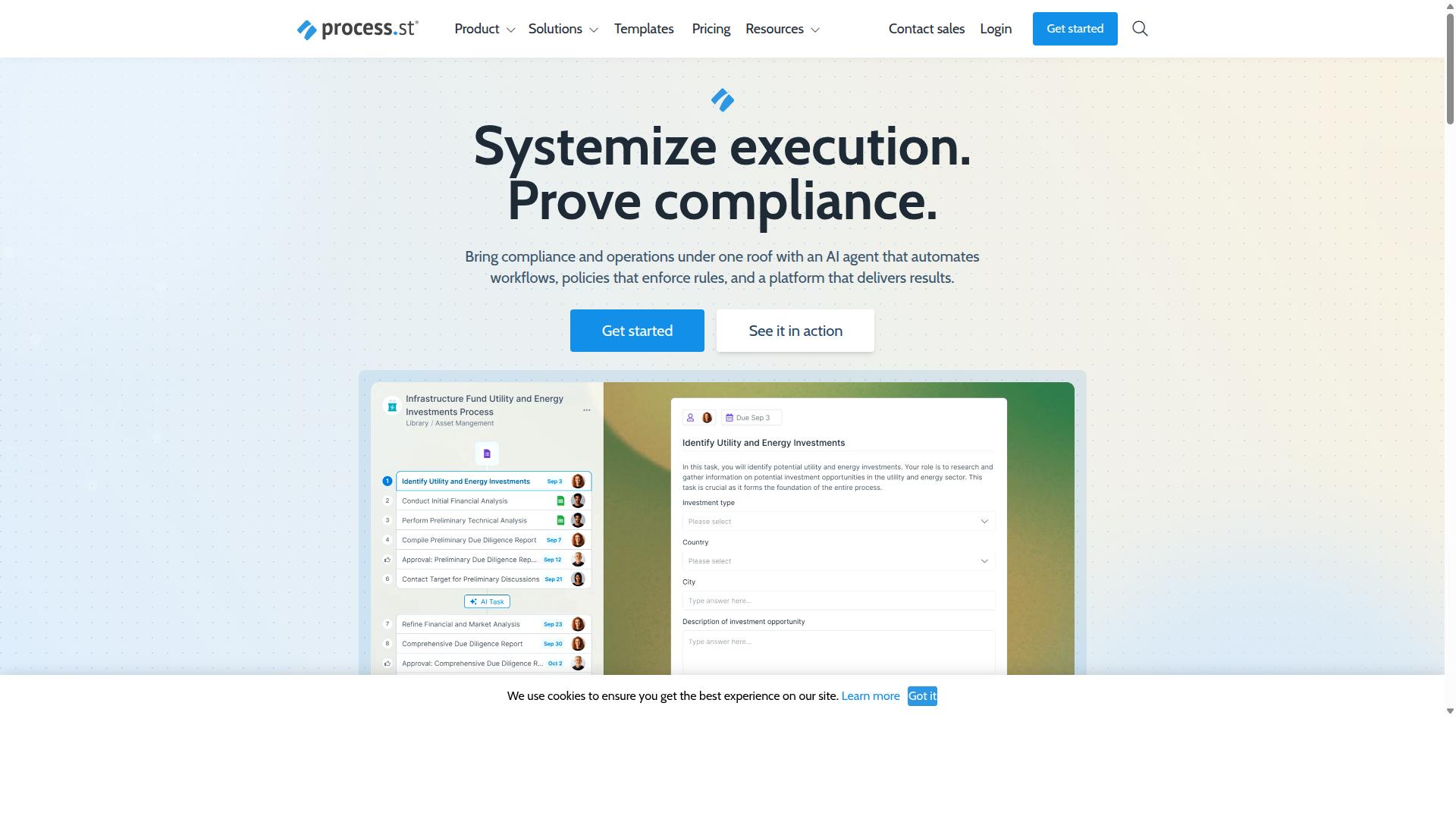
Process Street delivers comprehensive compliance operations through integrated document management and workflow automation.
The platform combines policy governance with operational execution for organizations managing multiple regulatory frameworks simultaneously. Its structure supports teams that need both document control and process enforcement in one system.
Process Street serves over 3,000 companies with its three core products. The platform maintains SOC 2 Type II certification and holds ISO 27001 certification, which demonstrates its commitment to security standards that many compliance teams require.
Multi-Standard Compliance Coverage
Docs component manages policy documents with full governance controls for ISO 9001, SOC 2, SOX, FDA, and additional frameworks.
Policy creation works through structured approval workflows that route documents to designated reviewers. This process ensures proper authorization before policies become active across the organization.
Version control tracks all changes with complete audit trails. Role-based access permissions limit document visibility according to job responsibilities and security requirements.
Teams can attach evidence directly to policy documents for audit purposes. Policy distribution tracking shows which employees have acknowledged each document, while certification readiness reporting compiles the documentation auditors need.
Workflow Automation and Ops Platform
Ops platform transforms compliance policies into executable workflows with AI-powered task orchestration.
Conditional logic routes tasks based on risk assessments and compliance requirements. This automation directs work to appropriate personnel without manual intervention.
SLA tracking monitors regulatory deadlines across different frameworks. The system flags upcoming due dates and overdue tasks to prevent compliance gaps.
Automated task assignment directs work based on compliance roles and responsibilities. Approval workflows incorporate digital signatures to document control implementation across all active policies.
AI-Powered Compliance Monitoring
AI-driven monitoring tracks control effectiveness and flags gaps before audit deadlines.
Real-time KPI dashboards display control status across all managed frameworks. These views help compliance teams identify which areas need immediate attention.
Gap analysis runs automatically to compare current controls against framework requirements. The system creates remediation tasks when it identifies missing or weak controls.
Evidence collection workflows gather artifacts from integrated systems without manual requests. This automation reduces the time required to prepare for audits while ensuring documentation stays current.
2. Diligent
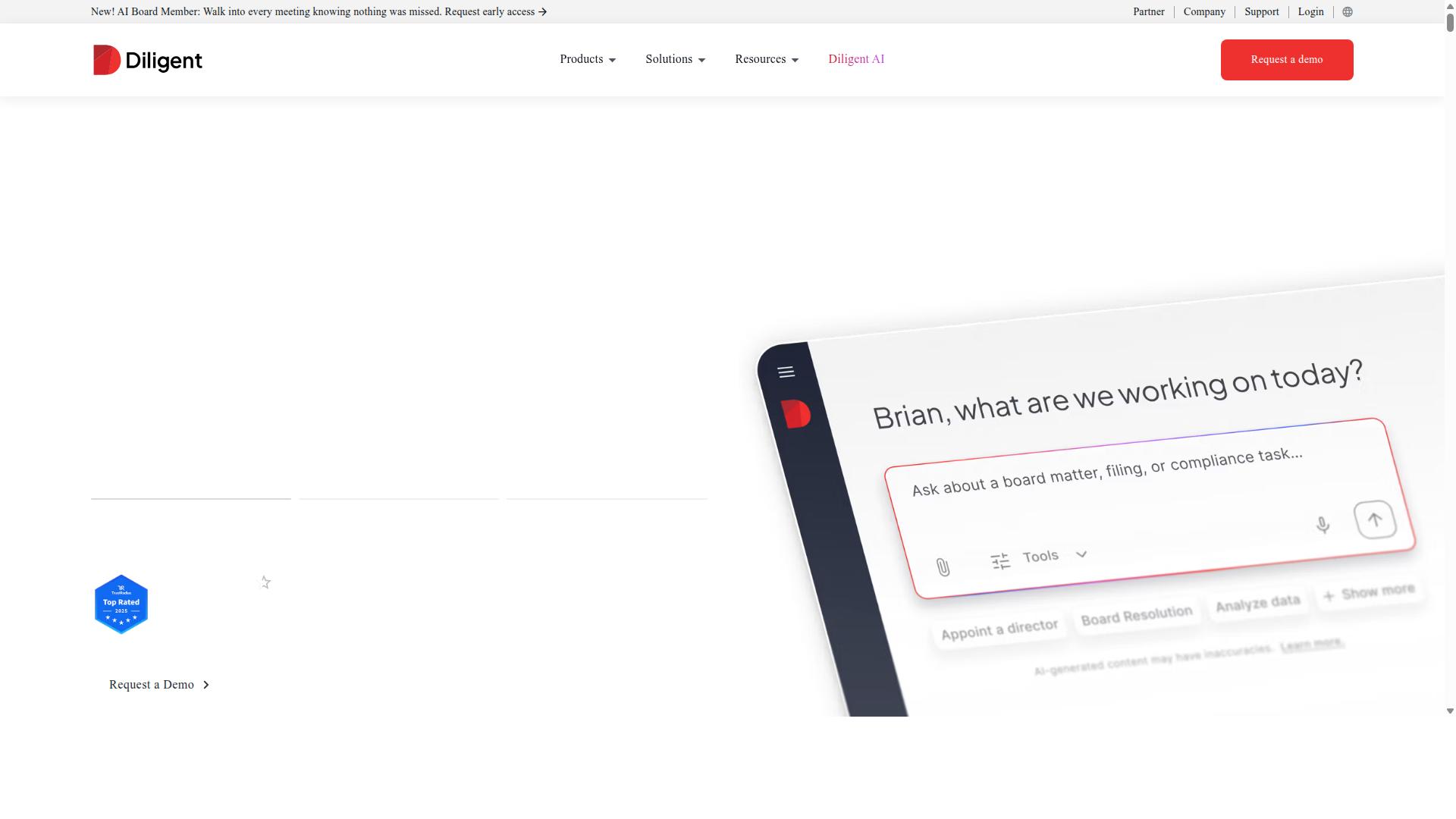
Diligent focuses on enterprise governance with emphasis on board-level oversight and entity management.
The platform supports workflow automation across multiple compliance standards including ISO 27001, SOC 2, and GDPR requirements. Organizations can track policy acknowledgment while maintaining audit trails across different business units and locations.
Board members receive consolidated views of compliance status through automated reporting packages. This structure helps maintain document control and evidence collection across subsidiaries while meeting regulatory reporting deadlines.
Enterprise Governance Features
Diligent provides enterprise policy management and entity-level compliance tracking.
The platform includes three key capabilities for multi-standard compliance management. Organizations benefit from a central policy repository that tracks acknowledgments across different regulatory frameworks.
Entity management handles subsidiary compliance records while maintaining consistent standards across multiple jurisdictions. Vendor assessment workflows support third-party risk management through structured evaluation processes and ongoing monitoring activities.
These features help maintain consistent policy enforcement across distributed operations while supporting continuous monitoring requirements for various certification standards.
Board-Level Risk Management
Board reporting features aggregate risk metrics for executive oversight.
The platform delivers three board-focused capabilities for risk visibility. Risk heat maps provide drill-down capability to examine specific compliance areas and regulatory requirements.
Automated regulatory reporting packages compile necessary documentation for multiple standards simultaneously. KPI dashboards present compliance status across business units through structured metrics and trend analysis.
These board-level tools support executive decision-making by presenting complex compliance data in accessible formats while maintaining the audit trails required for regulatory examinations.
3. Scrut Automation
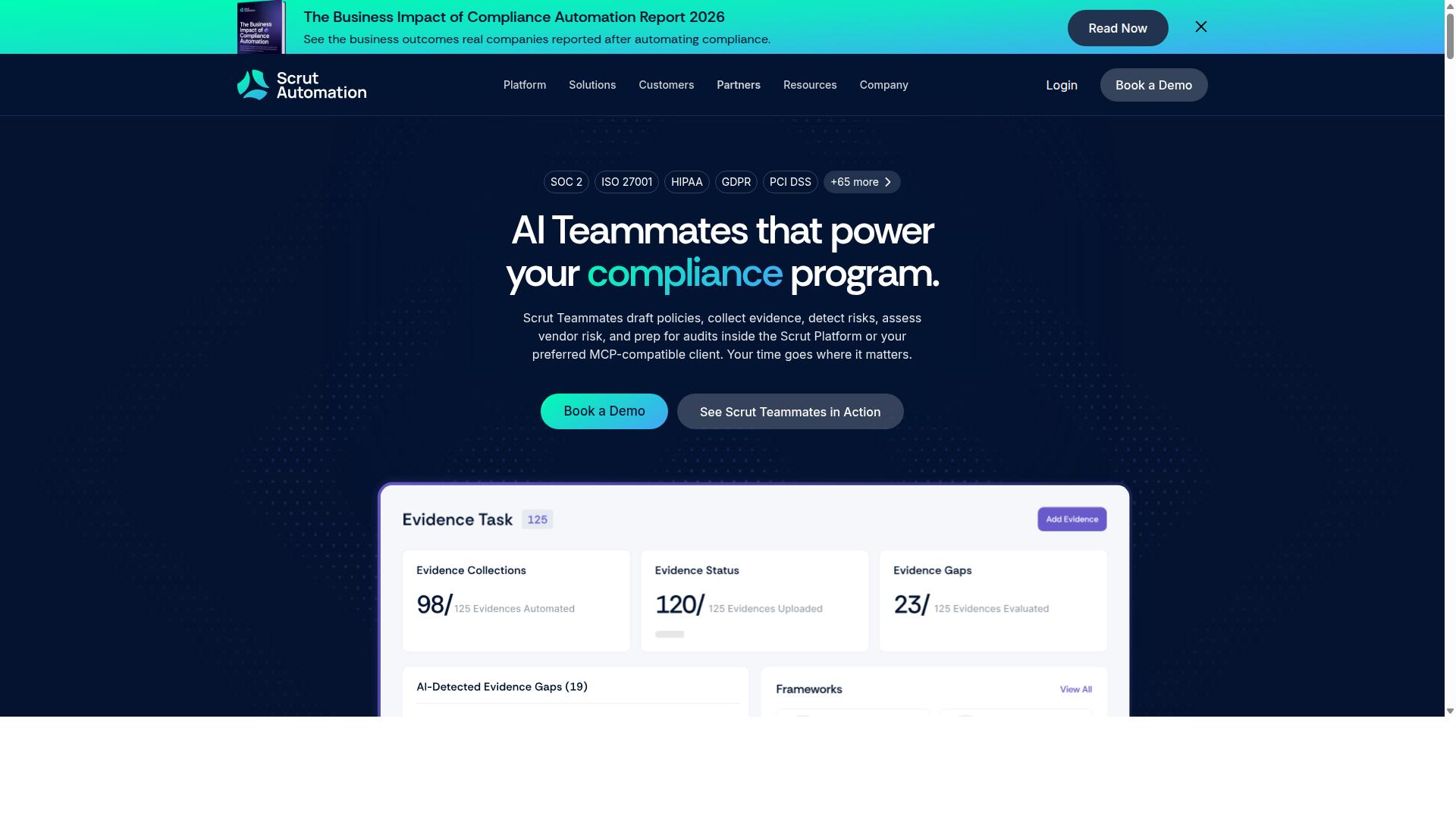
Scrut Automation targets security and compliance teams needing cloud-native automation.
The platform focuses on organizations managing multiple security frameworks simultaneously. Growing companies often struggle with fragmented compliance processes across different standards.
Security teams benefit from centralized control management. This approach reduces manual coordination between different compliance initiatives.
Security and Compliance Automation
Scrut provides automated security control testing and compliance evidence gathering.
The platform includes three key automation features for multi-standard compliance programs.
- Continuous security control monitoring with alerting
- Automated evidence collection from cloud infrastructure
- Compliance mapping between security frameworks and regulatory requirements
These capabilities support frameworks including SOC 2, ISO 27001, HIPAA, GDPR, PCI DSS, and others. Teams receive notifications when control status changes or new risks emerge.
Evidence collection happens automatically from connected cloud environments. This reduces the time required for audit preparation and documentation updates.
Integration and Scaling Capabilities
Cloud-native architecture supports rapid deployment across security and compliance workflows.
The platform offers three scaling capabilities for expanding compliance programs.
- API integrations with 50+ security and business tools
- Automated workflow scaling based on compliance program growth
- Role-based access for expanding compliance teams
These features help growing organizations maintain consistent processes as their compliance requirements increase. Teams can add users and expand monitoring scope without major system changes.
The platform serves startups through enterprise companies across industries including financial services, healthcare, and software development.
How to Choose the Right Option
Selection criteria must align platform capabilities with team size, compliance scope, and technical requirements.
Start by calculating user count against platform limits. Operations and compliance teams need to know exactly how many users require access and whether seats scale with business growth.
Next, teams should map required standards to control coverage. Finance, IT, and compliance roles benefit from platforms that support ISO 27001, SOC 2, GDPR, and other frameworks through built-in control libraries and policy enforcement workflows.
Evaluate integration requirements with existing tech stack. IT teams should verify connections to current document control systems, access control solutions, and regulatory reporting tools before committing resources.
Assess evidence collection automation needs across departments. Operations and customer management teams often require automated audit trails, version control, and document control to maintain certification readiness without manual intervention.
Finally, compare pricing models against budget constraints. Finance teams should examine per-user costs, feature tiers, and scalability limits to ensure the selected platform supports multi-standard compliance across the organization.
Final Verdict
Process Street stands out for organizations requiring both document governance and workflow execution across multiple compliance frameworks.
Four differentiators separate the platform from alternatives. More than 3,000 companies and one million users already rely on the system for daily operations.
The platform holds SOC 2 Type II and ISO 27001 certifications. These credentials simplify vendor assessment and certification readiness checks.
Customers report a 75 percent reduction in setup time. IMCD UK specifically documented this outcome after standardizing onboarding for 49,000 employees.
Teams also achieve 30 percent faster documentation. This gain matters when evidence collection and regulatory reporting coincide with tight audit windows.
Additional compliance features include HIPAA with a BAA available on request, GDPR, CCPA, and AWS CIS compliance. Data is never used to train AI models.
Support response averages five minutes with a 98 percent customer rating. The platform is available on the AWS Marketplace for procurement teams that prefer centralized billing.
While other workflow automation tools provide general task management, Process Street combines documented controls with execution tracking. This pairing helps teams maintain continuous monitoring without duplicating effort across frameworks.
Recommended Resources: