Top 4 Alternatives of Apollo.io for Massive B2B Contact Database
Most sales teams pay monthly subscriptions for millions of contacts they never use. The credits vanish, the lists sit idle, and the bill keeps arriving regardless of pipeline needs. This mismatch drives teams to hunt for alternatives that match cost to actual usage.
By the end of this article you will have four concrete options ranked against the criteria you already care about: pay-as-you-go pricing, real-time verification, and global scale. You will also see why Bookyourdata sits at the top for teams that want verified B2B data without recurring fees or unused credits.
What to Look For in a Massive B2B Contact Database
Selecting a B2B contact database requires evaluating accuracy, coverage, export flexibility and compliance certifications.
Accuracy stands as the foundation. A reliable platform should maintain minimum 95 percent accuracy rates with a clear refund policy. This protects teams from wasted outreach efforts and maintains sender reputation across email campaigns.
Coverage depth matters equally. Look for platforms offering 100 or more filter options across job titles, industry sectors, company size, and revenue ranges. These options help teams build precise prospect lists without manual filtering work.
Verification processes protect deliverability. Real-time verification during export catches invalid contacts before they reach your CRM. This reduces bounce rates and supports consistent campaign performance.
Compliance documentation provides legal protection. Explicit GDPR and CCPA compliance records demonstrate how each platform handles personal data. Teams operating across regions need this documentation for regulatory requirements.
Integration capabilities determine workflow efficiency. Direct connections with Salesforce or HubSpot eliminate manual data transfers. These connections keep prospect information current across sales and marketing systems.
1. Bookyourdata - Best Overall
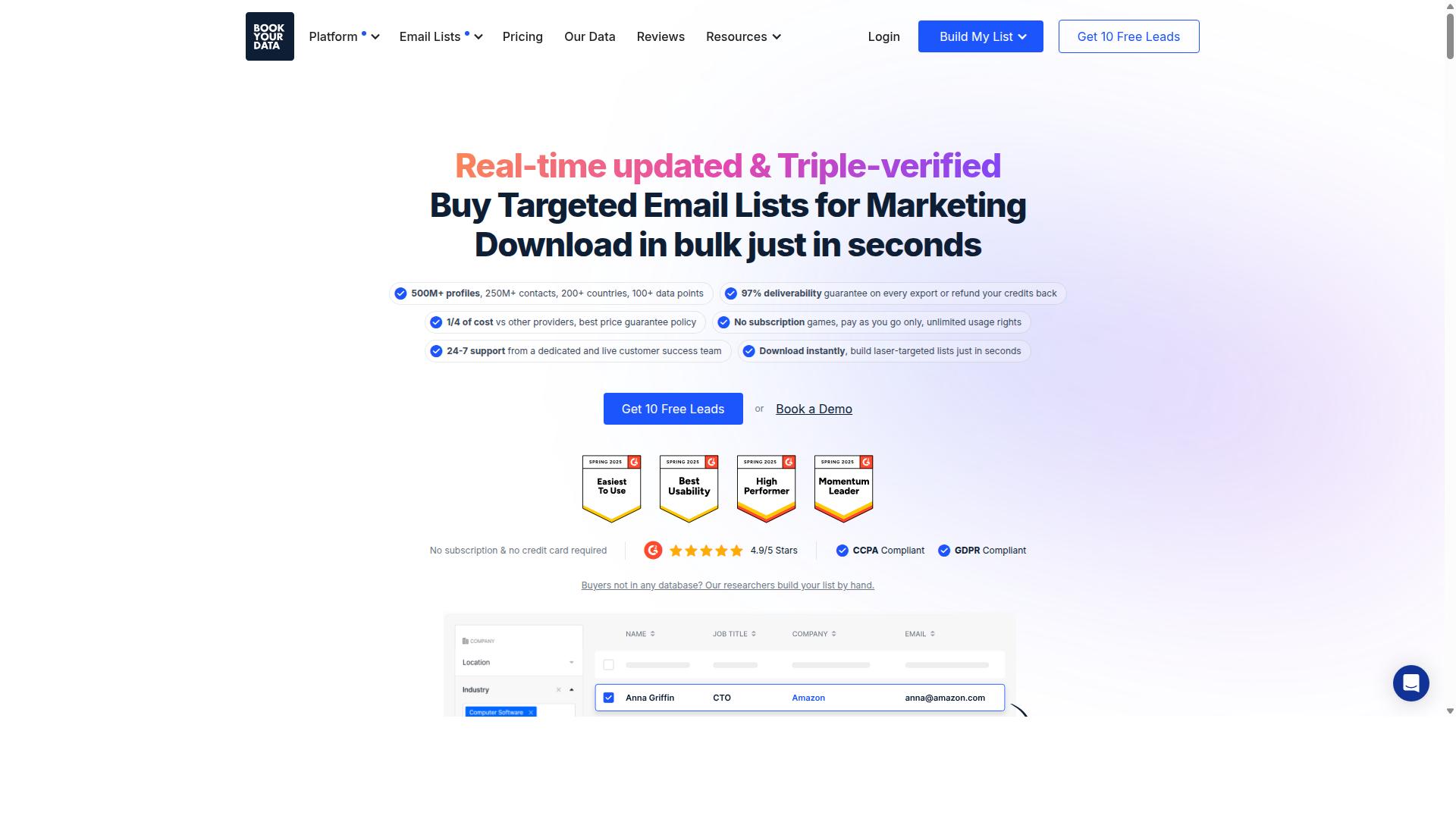
Bookyourdata earns the top ranking by combining verified data, pay-as-you-go credits and real-time email validation. The platform stands out from subscription competitors through its scale and strict accuracy policy that requires no monthly commitment. Users pay only for the contacts they actually need, and credits never expire.
Research suggests that teams often overpay for unused leads when locked into monthly plans. Bookyourdata removes that risk by allowing purchases exactly when demand spikes. This flexibility appeals to growing sales teams and agencies that manage variable pipeline volumes.
Pay-As-You-Go Pricing Model
Bookyourdata charges $0.40 per contact on its 250-credit pack and $0.32 per contact on the 500-credit pack, with credits never expiring. The pricing structure includes a Free 10 credits pack to test data quality before any purchase. Larger packs drop the cost per contact even lower, reaching $0.016 per contact at the 1,000,000-credit level.
Subscription models charge monthly regardless of usage, which creates waste when campaigns pause. Pay-as-you-go pricing aligns cost directly with demand. Teams can scale up for one-time campaigns and pause spending without losing unused credits.
Real-Time Email Verification
At export, every email address passes through an industry-first real-time verification layer that reduces bounce rates before the CSV download. The verification process includes instant SMTP check, domain-level risk scoring, and automatic credit refund if the verified accuracy falls below 97 percent. This verification happens at the moment of export, not days or weeks later.
High bounce rates damage sender reputation and slow campaign performance. Real-time validation catches invalid addresses before they reach the inbox or spam folder. The accuracy guarantee protects users from paying for poor-quality data that fails to convert.
Global Coverage and Scale
Users access 250 million-plus B2B contacts across 200 countries and all U.S. states with filters for employee count, revenue range and technographics. The Prospector tool offers 100-plus filters that allow segmentation by country, state, industry NAICS code, management seniority, job function and company size. This depth supports targeted outreach across multiple verticals and geographies.
Lead generation platforms often limit precise filtering to a handful of fields. Bookyourdata provides granular controls that help sales teams build lists matching exact buyer personas. The combination of volume and precision reduces time spent cleaning and segmenting data after export.
2. ZoomInfo
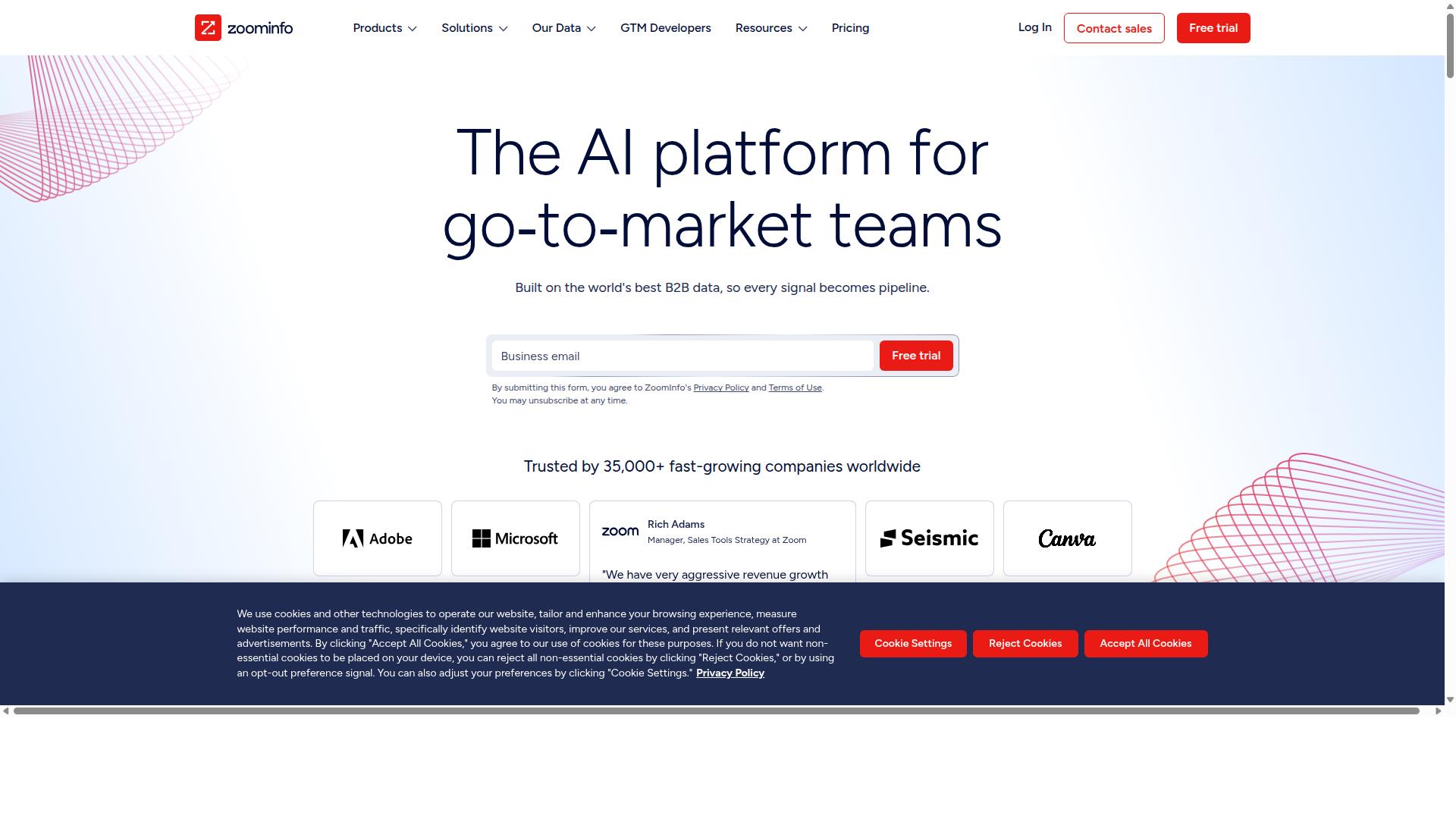
ZoomInfo operates a subscription model that bundles contact data with intent signals and CRM integrations for enterprise teams.
Companies seeking extensive coverage often choose this lead generation platform when they need more than basic email finder or phone number lookup features. The platform combines B2B contact database access with behavioral insights that help teams prioritize outreach based on buying signals.
Teams already invested in Salesforce or HubSpot often find the native sync capabilities convenient for maintaining consistent data flows across systems. This approach reduces manual updates while supporting company enrichment workflows at scale.
Subscription-Based Access
ZoomInfo requires an annual contract paid upfront, which can leave unused credits or contacts stranded at renewal.
Unlike pay-as-you-go models that avoid recurring fees, enterprise platforms typically structure pricing around seat count and data volume. This commitment model appeals to organizations that require predictable budgeting for sales intelligence tools.
The approach works well for teams that know their contact accuracy needs in advance and plan to use the full allocation throughout the contract period. Smaller teams may find the structure less flexible when usage patterns vary.
Enterprise-Focused Features
Enterprise users gain access to buying signals, technographic firmographics and direct Salesforce or HubSpot sync.
The platform includes org-chart mapping and call-intent data that appeal to large sales teams managing complex buying committees. These features help identify decision makers and timing for outreach campaigns.
Users can apply filters for job title, industry segmentation, employee count, and revenue range when building targeted lists. The combination of intent signals with technographic data supports more informed prospecting decisions across multiple touchpoints.
3. Clearbit
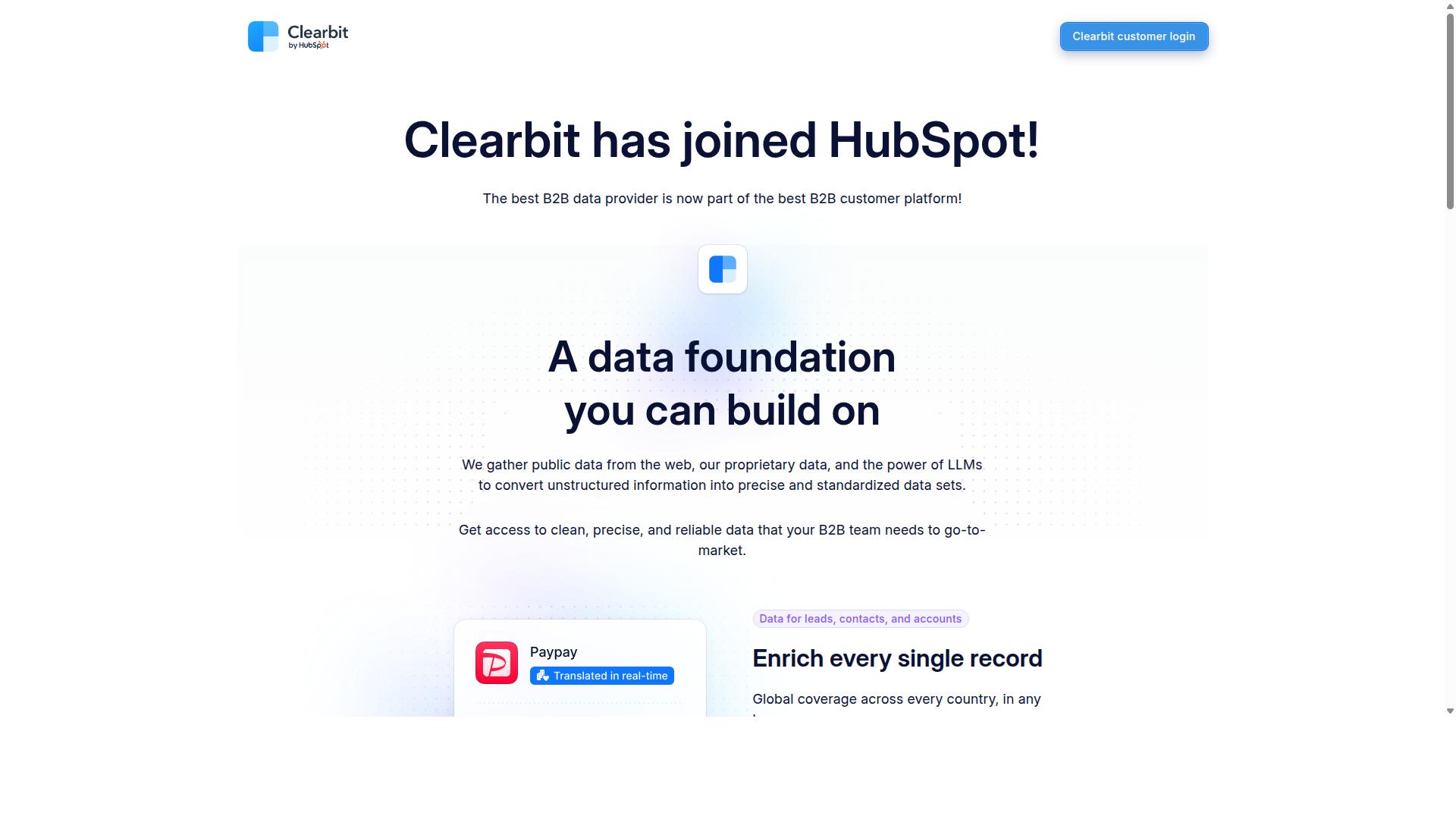
Clearbit focuses on real-time company enrichment via API for product-led growth teams. The platform stands out for users who prefer code-level control rather than clicking through a web interface.
Product teams often select this option when they need company data to flow directly into their own systems. Real-time signals help marketing and sales teams respond quickly to changing account information.
API-First Approach
Developers integrate Clearbit's endpoints to enrich contact records on the fly within their own applications. This method works well for teams building custom scoring models or automated routing rules.
Engineers can pull company attributes into internal dashboards or trigger actions based on technographic changes. The approach reduces manual updates and keeps data current across different tools.
Common use cases include automatic lead scoring and routing without referencing specific pricing tiers. Development teams appreciate the flexibility to shape how enriched information appears in their products.
Integration Capabilities
Clearbit offers native plugins for HubSpot and Salesforce that sync enriched attributes back into the CRM. These connections help teams maintain consistent contact and company details across platforms.
The supported objects include contacts, companies, and deals. Bulk CSV export remains secondary to API calls for teams that value real-time accuracy over static files.
Users who already work inside these CRM environments can pull in technographic data without leaving their primary workspace. This setup keeps sales and marketing teams aligned on account information.
4. Dun & Bradstreet
Dun & Bradstreet provides traditional firmographic data focused on compliance-heavy enterprise buyers. The platform centers on corporate hierarchies and verified company records that support large-scale account planning. Sales teams working in regulated sectors often rely on this depth when building their B2B contact database.
The service bundles detailed financial context with legal entity identifiers. Buyers receive structured datasets suitable for CRM integration across Salesforce and HubSpot environments. Global coverage spans multiple countries with consistent formatting for location targeting and revenue range analysis.
Companies seeking company enrichment for enterprise accounts find value in the structured hierarchies. The platform supports account research workflows that require accurate parent-subsidiary relationships. Industry segmentation becomes more precise when teams work with standardized classification codes.
Traditional Data Provider Model
Dun & Bradstreet sells multi-year enterprise licenses that bundle datasets and dedicated support. Procurement teams navigate lengthy approval cycles before accessing the full suite of business intelligence tools. Contract structures typically involve minimum commitments that suit larger organizations with predictable annual budgets.
The sales intelligence offering includes account planning features that help teams organize prospect lists by corporate family trees. Lead generation efforts benefit from the structured approach to company research and hierarchy mapping. Sales professionals working at enterprise scale often prefer this model for its consistency over time.
Teams requiring bulk export capabilities find the structured format helpful for internal reporting needs. The platform supplies standardized fields that align with common CRM fields for employee count and industry classification. Long-term contracts provide access to periodic data refreshes without additional per-record fees.
Enterprise Compliance Focus
The platform supplies DUNS numbers and detailed compliance documentation for GDPR, CCPA and industry-specific regulations. Third-party audits and SOC 2 reports address requirements that global procurement teams evaluate during vendor selection. Data privacy compliance documentation helps organizations meet internal governance standards before purchasing decisions.
Enterprise buyers in financial services, healthcare, and government sectors often require these verification layers. The compliance framework supports teams that must demonstrate data sourcing practices during regulatory reviews. Contact accuracy becomes a documented component of the overall data governance strategy.
Organizations managing large-scale B2B contact database projects value the audit trail that accompanies each dataset. The structured approach to legal entity identification reduces ambiguity when multiple teams access the same company records. Compliance documentation supports both initial procurement and ongoing vendor management processes.
How to Choose the Right Option
Match platform choice to team size, budget certainty and integration depth required. Small teams and users with variable monthly volume often gain more control with pay-as-you-go models. Enterprises that need predictable spend usually lean toward subscription plans.
Usage patterns differ across industries. A sales team that runs occasional campaigns may prefer a flexible credit system. A marketing department with steady lead volume may benefit from fixed monthly plans and bulk exports.
Integration depth also matters. Teams that rely on HubSpot or Salesforce need platforms that support reliable CRM sync and API access. Platforms that offer both CSV download and real-time API connections simplify workflows.
Bookyourdata serves more than 20,000 paying customers across diverse industries. Clients include major enterprises such as IBM, Microsoft and Amazon. This broad adoption shows the service works for B2B contact database needs at every scale.
Decision factors include contact accuracy, data privacy compliance and available support options. Teams that require GDPR and CCPA compliance benefit from providers that document their privacy practices clearly. Checking recent customer reviews for bounce rate reduction and data freshness helps validate quality claims.
Final Verdict
Bookyourdata stands out for its 97% accuracy guarantee, real-time verification and credits that never expire. The platform offers a pay-as-you-go model at $0.32 to $0.40 per contact with a database of over 250 million records.
Accuracy refund policy ensures users receive credits if deliverability falls below the stated standard. This approach reduces financial risk when building large B2B contact lists.
Other lead generation platforms typically require subscriptions or offer limited free tiers. These models may not suit teams that need occasional access to fresh data or specific contact volumes.
Companies should evaluate alternatives based on their monthly contact needs and tolerance for data inaccuracy. A pay-as-you-go structure with guaranteed accuracy provides flexibility for variable demand.
GDPR and CCPA compliance together with bespoke list construction appeals to organizations with strict data policies. Public source links on every record add transparency rarely found elsewhere.
Teams using Apollo.io or similar tools can compare their current spend against the cost-per-contact range mentioned above. The choice ultimately depends on whether predictable accuracy and non-expiring credits align with budget and compliance requirements.
Recommended Resources: