Excel Macro Replacement Automation Pricing: What Should You Expect to Pay?
Your Excel macros break every time someone edits a column. Rebuilding that automation costs money, and most teams have no idea what a fair price looks like before they start asking vendors.
This article breaks down what drives the cost of replacing macro automation, including complexity, user count, and ongoing maintenance. You will also see how Tasks.Bot's per-member pricing at ₹200 per month or ₹1,200 per year compares, plus which features matter most when you make the switch.
What Is Tasks.Bot and How Does It Replace Excel Macro Automation?
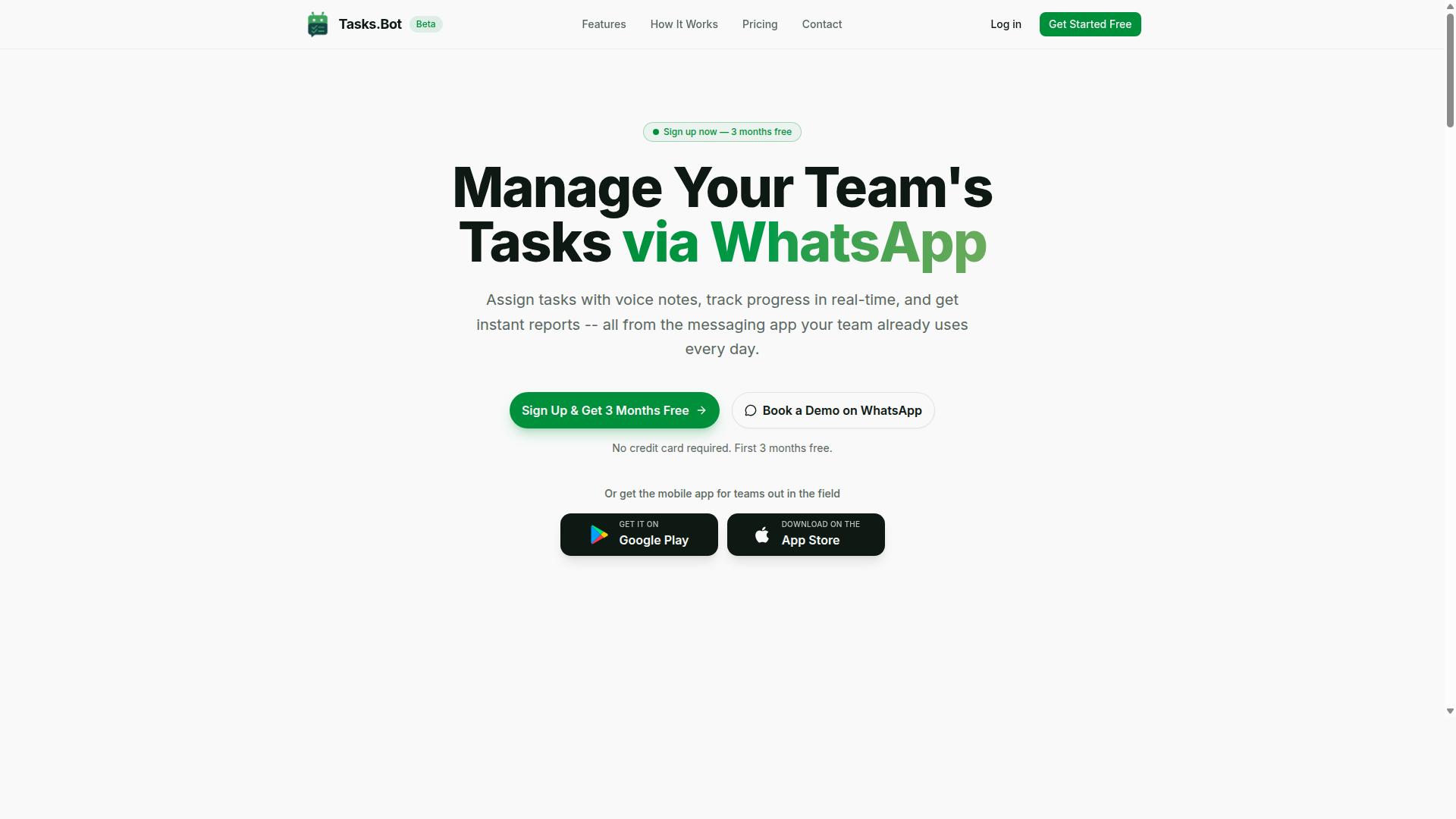
Tasks.Bot is a task management platform that operates entirely within WhatsApp, allowing teams to assign tasks, track progress, and receive reports without leaving the messaging app they already use daily. It also offers a mobile app for field teams, so workers who are not sitting at a desk can still stay connected to the same workflow.
For anyone weighing the cost of an Excel macro replacement, that difference matters. Tasks.Bot removes the need for VBA scripts by providing a no-code automation layer inside a messaging app your team already has open.
The service is currently in beta and offers a free trial period, which gives teams a low-risk way to see how a no-code approach fits their workflow before committing to any long-term automation spend.
Traditional Excel macros carry hidden costs that rarely show up in a simple price quote. A macro typically needs desktop Excel installed, a person to remember to trigger it, and someone technical to fix it when a workbook changes. That maintenance burden is exactly what drives up VBA migration and modernization budgets later.
Tasks.Bot takes a different route. Instead of scripts tied to a file on one machine, the platform runs through WhatsApp, is mobile-first, and requires no installation. There is no macro to break when a spreadsheet gets reformatted, and no dependency on a single desktop.
- Traditional Excel macros: require desktop Excel, manual triggering, and ongoing technical upkeep
- Tasks.Bot: runs inside WhatsApp, works on mobile, and needs no installation
- Setup difference: macros demand coding skill, while a no-code layer lets non-technical staff manage tasks directly
The core value proposition is simple. Assign tasks, track progress, and receive reports in one place, without a developer writing or maintaining code for every change. That shifts automation from a technical project into an everyday team habit.
Because Tasks.Bot is built on a messaging app rather than a spreadsheet file, it sidesteps several common pain points at once. There is no desktop requirement, no manual trigger to forget, and no fragile script waiting to fail after an update. For teams comparing process automation options, that simplicity is the main appeal.
It is worth being clear about what this section covers. The exact costs of replacing Excel macros, including consultant rates and project pricing, are addressed later in this article. Here, the focus is simply on what Tasks.Bot is and why a no-code, WhatsApp-based approach changes the automation conversation.
The bottom line: Tasks.Bot is a legitimate, purpose-built task management platform that replaces scripted spreadsheet automation with a no-code layer inside the app your team already uses. For teams tired of maintaining VBA, it offers a practical, mobile-first alternative.
What Should You Expect to Pay for Excel Macro Replacement Automation?
Replacing Excel macros with a modern automation solution typically involves costs that vary widely based on complexity, user count, and ongoing maintenance requirements.
Traditional macro replacement projects usually mean hiring an automation consultant or development team. That brings custom development, testing, and documentation work, and with it, expenses that are hard to pin down in advance. A simple rebuild might land at a few thousand dollars. A larger VBA migration can run far higher.
Most vendors price this work in one of three ways:
- Hourly rates of roughly $50 to $150 per hour for consultants and developers
- Fixed-price projects that commonly range from $5,000 to $50,000 or more
- Retainers for ongoing support and maintenance
Scope changes and hidden dependencies push these numbers up fast. The sections below break down what actually drives the cost and how a per-member model changes the math.
Typical Cost Factors: Complexity, Users, and Maintenance
The total cost of replacing Excel macros hinges on several key factors, including the complexity of existing macros, the number of users who rely on them, and the ongoing maintenance required to keep automations running smoothly.
Complexity is usually the biggest driver. A complexity assessment looks at how many macros exist, how they depend on each other, and how large the workbooks have grown. Each of these raises development and testing effort.
Integration points matter just as much. Every API connection, database link, or third-party add-in adds a piece that must be rebuilt and verified. Security compliance requirements add another layer, since regulated data often demands extra controls and review before anything goes live.
Consider the gap between two projects. A workbook with five simple macros might take days to migrate. A workbook with 50 macros, 10 integrations, and heavy data volume can take weeks or months, with far more testing effort attached.
User count affects licensing, training, and support. More people means more onboarding sessions, more questions, and more surface area for issues after launch.
Maintenance is the cost teams forget. Documentation, refresher training, a support plan, and a maintenance contract all carry ongoing fees. Legacy macro modernization is rarely a one-time expense, which is why cost estimation should always include year two and beyond.
How Tasks.Bot's Pricing Compares: ₹200/Month or ₹1,200/Year per Member
Tasks.Bot offers a transparent, per-member pricing model that stands in stark contrast to the variable and often opaque costs of custom macro replacement projects.
The Full Access plan includes all features, with no hidden fees. Pricing is available in Indian Rupees and US Dollars, and the site lets you select your currency. The monthly plan costs ₹200 per member per month. The annual plan costs ₹1,200 per year per member, a saving of 50% and ₹1,200 per year per member compared with paying monthly.
New users also get three months free, with no credit card required. Cancellation is allowed at any time, so there is no long-term lock-in to weigh against a fixed-price contract.
The contrast becomes clear with a simple example. A team of 10 users pays ₹2,000 per month, or ₹12,000 per year, on Tasks.Bot. A custom macro replacement project might cost $10,000 or more upfront, before any ongoing maintenance or support fees are added.
That difference matters most for predictability. Custom development quotes shift when scope grows or dependencies surface. A per-member rate stays flat as long as the team size stays flat, and it scales in a straight line when you add people.
| Cost Model | Typical Structure | Predictability |
|---|---|---|
| Custom macro replacement | Hourly, fixed-price, or retainer | Low, scope changes raise cost |
| Tasks.Bot Full Access | ₹200 per member per month or ₹1,200 per year per member | High, flat per-member rate |
For teams weighing process automation against a bespoke build, the per-member route removes most of the guesswork. You know the number before you commit, and it holds.
Key Features That Replace Manual Excel Macros
Tasks.Bot replaces manual Excel macros by offering a suite of automation features designed for teams that communicate via WhatsApp, eliminating the need for desktop scripts and manual triggers.
Instead of writing VBA, users work inside a chat app they already know. No-code automation removes the technical barrier that makes Excel VBA migration expensive and slow.
The platform pairs AI-driven task creation with real-time reporting, so the logic that once lived in a spreadsheet now runs in conversations and dashboards. Two features carry most of that weight: natural language input and built-in automations.
Voice Note Task Creation and AI Natural Language Input
One of Tasks.Bot's standout features is the ability to create tasks via voice notes or natural language text, which the AI interprets and converts into structured tasks automatically.
In practice, a user sends a WhatsApp voice note saying "Assign John to fix the printer by Friday." The AI parses the intent, assigns the task, sets the deadline, and notifies John. No form, no spreadsheet row, no code.
Compare that to Excel macros. Reaching similar automation in VBA means manual data entry, structured input cells, and custom code to handle assignment and reminders. Each new rule adds complexity, and each change to the workbook risks breaking the script.
Tasks.Bot removes those technical barriers entirely. There is no macro syntax to learn and no developer to hire for routine changes. Because the service operates entirely within WhatsApp, team members don't need to install anything or create new accounts.
Field teams are a natural fit. A technician can send a voice note about a broken asset, and the AI can turn it into a task with an assignee and due date. That is the kind of capture that spreadsheets handle poorly, since field staff are rarely at a desk entering data.
For anyone weighing Excel macro replacement, this shifts the cost picture. Voice and natural language input replace the development hours that would otherwise go into VBA migration and ongoing script maintenance.
Automations, Smart Deadlines, and Instant Reports
Tasks.Bot automates routine workflows such as task assignment, deadline reminders, and report generation, replicating the logic of Excel macros but without any coding.
The platform covers several capabilities that map directly onto common macro use cases:
- Approvals and automations that move work forward based on triggers
- Smart deadline reminders that keep tasks on schedule
- Instant reports summarizing task status, attendance, and hours
- Shifts, leave, and hours management
- Face-verified attendance and live GPS tracking for field staff
- Tasks on a map and a live day tracker
Think about what teams normally build in VBA. An email reminder when a due date passes. A status cell that updates when a checkbox is ticked. A pivot table refreshed on open. Each of those is a small script, and together they form a fragile workbook that only one person understands.
Here, the same outcomes come from configured triggers. When a task is marked complete, the next step can be assigned automatically. When a deadline slips, reminders escalate. Reports generate instantly rather than waiting for someone to open a file and refresh data.
Two advantages stand out against Excel macros. First, everything is real-time, so status reflects what is happening now, not the last time the workbook was saved. Second, it is mobile accessible through native Android and iOS apps with push notifications, voice capture, and a home screen widget. A macro lives on a desktop. A task lives wherever the team is.
Enterprise-grade encryption protects the data, and conversations and task data are never shared or used for training. For teams comparing automation pricing, that combination of compliance and no-code setup is often what tips the decision away from legacy macro modernization projects.
Pricing and Plans: Full Access, Free Trial, and Refund Policy
Tasks.Bot offers a single 'Full Access' plan that includes every feature, with pricing at ₹200 per member per month or ₹1,200 per year per member, and a refund policy for peace of mind. That is the entire pricing structure. No tiers, no feature gates, no upsells.
For anyone comparing this to the quotes that typically come with a custom Excel macro replacement project, the contrast is stark. A consultant handling VBA migration might bill hourly, propose a fixed-price project, or ask for a retainer before work even begins. Tasks.Bot simply publishes its rate.
Per-member pricing means the cost scales with your team, not with the complexity of what you automate. A five-person team pays for five members. A fifty-person team pays for fifty. Nothing about workbook size, data volume, or the number of macros changes the math.
Pricing is listed in both Indian Rupees and US Dollars, and the site provides a 'Select currency' option so you can verify the figure that applies to you before committing.
| Plan | Rate | Notes |
|---|---|---|
| Monthly | ₹200 per member per month | Full Access, all features |
| Annual | ₹1,200 per year per member | Save 50%, save ₹1,200/yr per member |
The annual plan works out to roughly half the monthly rate over twelve months. For a team of ten, that difference is meaningful: the annual commitment saves ₹1,200 per member per year compared with paying month to month.
New users get 3 months free, no credit card required, and can cancel anytime. That trial period gives a team enough runway to test whether the platform fits their workflow before any payment is made.
Tasks.Bot also states a refund policy, which is referenced in the site footer. Combined with the no-card trial and the ability to cancel anytime, the risk of trying the platform is low. You are not locked into a long contract or a scope-of-work negotiation.
This is where the simple model pays off against the alternatives. Custom macro replacement quotes often bundle complexity assessment, testing effort, documentation, training, and a maintenance contract into one opaque number. Those projects can involve API connections, database links, third-party add-ins, and security compliance reviews, all of which drive cost upward and make budgeting difficult. Tasks.Bot sidesteps that entirely by charging a flat per-member rate.
To estimate your own cost, start with a headcount. Multiply your team size by ₹200 for a monthly figure, or by ₹1,200 for the annual equivalent. A team of eight, for example, would pay ₹1,600 per month or ₹9,600 per year. A team of twenty would pay ₹4,000 monthly or ₹24,000 annually.
That kind of arithmetic takes a minute. A traditional automation consultant quote can take weeks to arrive, and the final number depends on factors you may not fully control. For teams weighing legacy macro modernization against a simpler path, a published rate removes the guesswork from cost estimation.
One practical note: confirm the currency setting before you calculate. Since both INR and USD are supported, the displayed figure should match the currency your finance team budgets in. Checking that detail early avoids a surprise at renewal.
The bottom line is that Tasks.Bot keeps pricing transparent and predictable. One plan, every feature, a free trial with no card required, and a refund policy backing the purchase. For a team that wants to move away from fragile Excel VBA without signing a custom development contract, that clarity is the point.
Trust Signals: Beta Status, Encryption, and Teams Already Using Tasks.Bot
Tasks.Bot is currently in beta, which means it is actively being refined, but it already incorporates security measures like encryption and is used by hundreds of teams worldwide. For anyone weighing automation pricing, that combination matters: a platform still evolving is also one that listens and ships improvements quickly.
Beta status often raises a fair question. Is the product stable enough for real work? In the case of Tasks.Bot, the answer is yes for many use cases. Hundreds of teams already rely on it for daily task management and field coordination, which is a strong signal that the platform is production-ready, not a rough prototype.
Security is the other common concern. Tasks.Bot uses enterprise-grade encryption to protect conversations and task data. Just as important, that data is never shared or used for training. For teams handling client details, staff records, or operational schedules, that commitment removes a major barrier to adoption.
Two features reinforce accountability. Face-verified attendance confirms that the right person checked in, and live GPS tracking gives field teams a verifiable location trail. Both capabilities are built for teams that need proof of work, not just task lists.
Where does Tasks.Bot operate? Entirely within WhatsApp. Team members don't need to install anything or create new accounts, and they can create tasks using natural language or voice notes. Since WhatsApp is already a trusted communication channel for many organizations, adoption friction stays low.
The platform is available globally, so distributed teams across regions can use the same system without new infrastructure. A 3-month free trial with no credit card required lets teams evaluate fit before committing budget.
Rapid iteration is a benefit, not a drawback. Beta products that respond to feedback tend to close gaps faster than static tools. When evaluating automation pricing, weigh that responsiveness alongside encryption, verified attendance, and the confidence of hundreds of active teams. On those measures, Tasks.Bot stands as a legitimate, secure choice.
Who Should Use Tasks.Bot for Automation
Tasks.Bot is ideal for teams that rely on WhatsApp for communication, especially those with field staff who need to manage tasks, track attendance, and generate payroll-ready hours without installing new software. The platform targets teams already comfortable with WhatsApp as their main channel, so there is no steep learning curve and no new app for workers to download.
The service is already used by hundreds of teams, which suggests the fit is not limited to one industry or company size. If your daily coordination happens in chat threads, Tasks.Bot fits naturally into that habit instead of forcing a switch to a desktop tool.
For these groups, the appeal is practical. Excel macros typically require a desktop, a specific file, and someone who knows how to run it. Tasks.Bot works from a phone, which matters when the people doing the work are not sitting at a computer.
Cost also plays a role. Replacing a macro with custom automation often means paying for a complexity assessment, development time, and ongoing maintenance. Tasks.Bot offers a lighter path that covers the coordination work most field teams actually need.
Several audience segments tend to benefit most:
- Small and medium businesses that need task tracking without hiring a developer or buying enterprise software.
- Field teams in construction, delivery, and maintenance, where staff are mobile and rarely at a desk.
- Remote teams spread across locations who already run their day through group chats.
- Any organization using WhatsApp as a primary communication tool and wanting automation built around it.
Common use cases follow the same pattern. A supervisor assigns a job to a field technician through chat. Project progress gets tracked as work is marked complete. Reminders go out automatically so nothing slips, and attendance and hours feed into payroll-ready records.
Not every team is a fit, and it helps to be honest about that. Groups that depend on heavy offline Excel calculations, complex spreadsheet models, or workbook logic that must run without an internet connection may still need a traditional Excel macro replacement or a desktop-based approach. Those are different problems with different budgets.
Tasks.Bot suits coordination work. It is not a substitute for deep spreadsheet computation, and teams should match the tool to the job rather than the other way around.
Final Verdict: Is Tasks.Bot Worth the Price?
For teams seeking a straightforward, low-cost alternative to Excel macro automation, Tasks.Bot delivers compelling value through its WhatsApp-native interface, AI features, and transparent per-member pricing.
The broader automation pricing landscape makes this comparison easy to frame. Custom development, VBA migration projects, and RPA rollouts typically carry high hourly rates, fixed-price contracts, or ongoing retainers. Tasks.Bot avoids that entire cost structure by charging per member, with no installation required.
That difference matters most for smaller teams. A business weighing automation consultant fees against a simple per-seat tool will usually find the per-seat route faster to approve and easier to scale back if needs change.
Here is how the value breaks down in practice:
- Cost savings: No custom development budget, no hourly consulting invoices, and no fixed-price project tied to a scope of work.
- Ease of use: Tasks.Bot runs on WhatsApp, so there is nothing to install and no new platform for the team to learn.
- Feature fit: Its AI-driven features cover many of the routine tasks teams once handled with Excel VBA macros.
- Accessibility: Mobile access means the tool travels with the team instead of sitting on one desktop.
Those four points are the core of the pitch. Each one removes a cost or a friction point that traditionally shows up in legacy macro modernization budgets, whether that is testing effort, documentation, training, or a maintenance contract.
The honest trade-offs are worth naming too. Tasks.Bot is still in beta, so features may evolve, and it relies on WhatsApp as its primary channel. Teams that avoid WhatsApp, or that need a fully mature platform today, should factor that in.
For everyone else, the calculation is simple. The risk is low, the setup is quick, and the spend is predictable rather than project-based. Compared with Python automation, Power Automate, or Office Scripts migrations, there is no migration timeline to manage at all.
Our recommendation is clear: Tasks.Bot is worth the price for teams that match its target audience and want a fast, low-risk route to process automation. It will not suit every enterprise scenario, but for small and mid-sized teams it removes the cost barriers that make macro replacement feel out of reach.
To talk through pricing, scope, or fit, reach the team directly at +91 97143 42522 or [email protected]. You can also Book a Demo on WhatsApp to see the platform in action before committing.
Frequently Asked Questions
How is Excel macro replacement automation priced?
Most automation tools charge either a flat monthly fee or a per-user subscription, and some add setup or onboarding costs on top. Because every vendor structures this differently, always ask whether the quoted price covers all users, support, and future changes. Tasks.Bot keeps it simple with a single 'Full Access' plan that includes all features, so there are no tiers to compare.
What does Tasks.Bot cost compared to hiring a developer to maintain macros?
Custom macro development and ongoing maintenance typically involve upfront build costs plus hourly fees whenever something breaks or needs updating. Tasks.Bot instead uses straightforward subscription pricing: ₹200 per member per month, or ₹1,200 per year per member on the annual plan (a 50% saving). For teams already paying for ad-hoc developer time, a predictable subscription is often easier to budget for.
Are there hidden costs I should watch out for with automation pricing?
Common hidden costs include per-user overage charges, fees for extra integrations, and paid support or training. Tasks.Bot's 'Full Access' plan includes all features with pricing available in both Indian Rupees (₹) and US Dollars ($), so there are no feature tiers to upgrade out of. As with any purchase, review the vendor's refund policy before committing.
Do I pay per user or a flat rate for automation software?
Per-user pricing is the most common model for team software, which means your cost scales as your team grows. Tasks.Bot follows this model at ₹200 per member per month or ₹1,200 per year per member. If you have a large or fluctuating team, calculate the per-member cost against your expected headcount before choosing between monthly and annual billing.
Is there a free trial or demo before I pay?
Many automation vendors offer a trial period, though terms vary widely, so confirm the details directly with whichever tool you're evaluating. Tasks.Bot is currently in beta and offers a 'Book a Demo on WhatsApp' option, letting you see how task assignment, reminders, and reports work before subscribing. You can reach the team at [email protected] or +91 97143 42522 with questions.
Why does automation pricing vary so much between providers?
Prices differ based on how many features are bundled, whether setup and migration are included, and how the vendor handles support and scaling. Rather than chasing the lowest headline number, compare what's actually included at your team size. Tasks.Bot's approach is a single all-features plan, which makes that comparison easier: one price per member, whether you bill monthly or annually.
Recommended Resources: